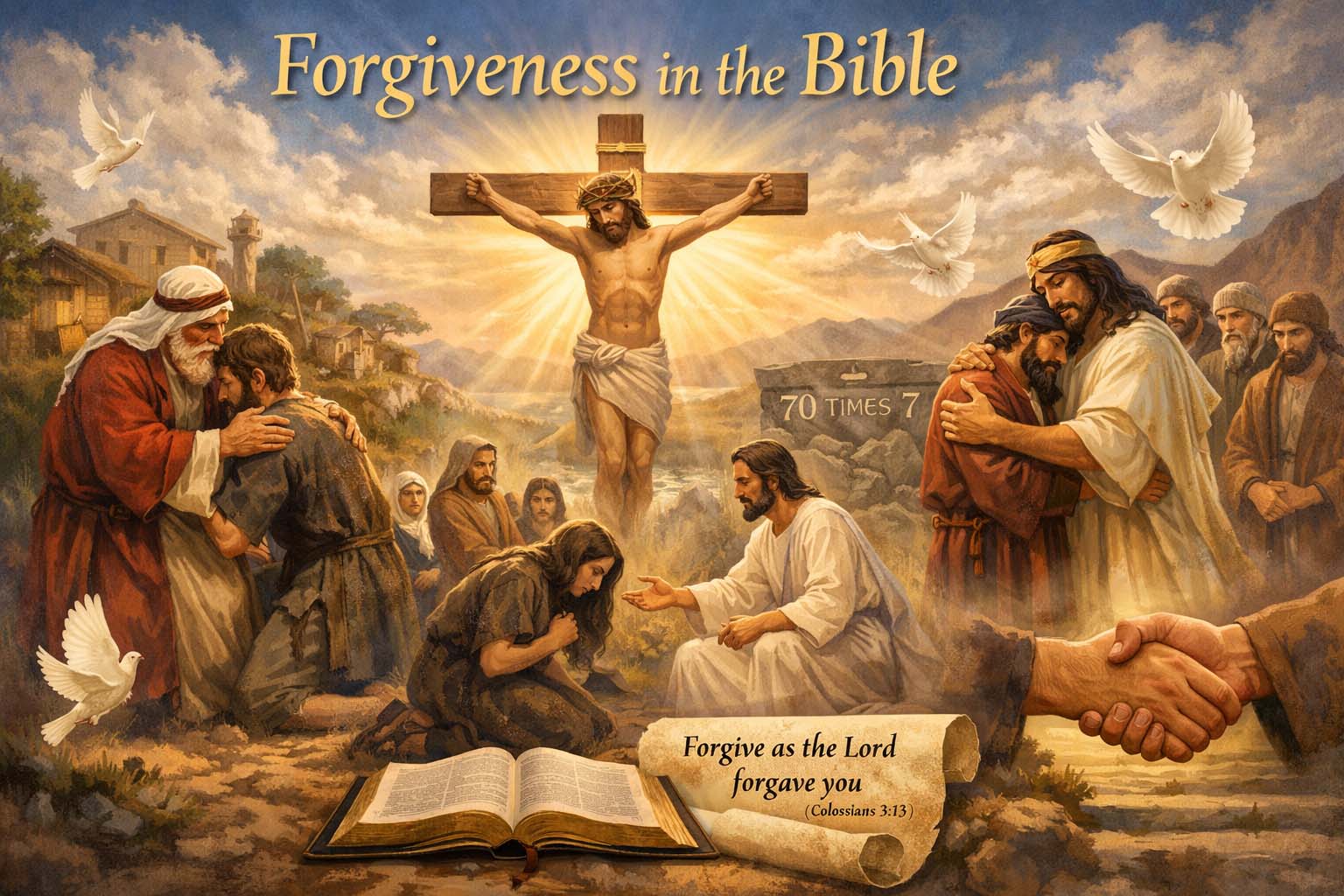
most important spiritual themes in Scripture. From Genesis to Revelation, the Bible teaches that forgiveness brings healing, peace, restoration, and renewed relationships. It shows God’s mercy toward humanity and encourages believers to forgive others with compassion and grace.
Many people carry pain from past mistakes, broken trust, or hurtful experiences. The message of forgiveness in the Bible offers hope for anyone struggling with guilt, anger, or resentment. It reminds us that no heart is beyond healing and no life is beyond redemption.
Understanding forgiveness in the Bible can help people grow spiritually, emotionally, and relationally.
What Does Forgiveness Mean in the Bible?
In biblical teaching, forgiveness means releasing a debt, pardoning wrongdoing, and choosing mercy over revenge. It does not mean pretending sin never happened or allowing harmful behavior to continue. Instead, forgiveness means surrendering bitterness and trusting God with justice.
Biblical forgiveness often includes:
- Letting go of resentment
- Choosing mercy
- Seeking peace when possible
- Restoring relationships with wisdom
- Accepting God’s grace
Forgiveness is both a decision and a process.
God’s Forgiveness in the Bible
One of the clearest messages in Scripture is that God is loving, patient, and ready to forgive. Throughout the Bible, people fail repeatedly, yet God continues to show mercy when they repent.
Truths About God’s Forgiveness
- God is compassionate and gracious
- God forgives sincere repentance
- God offers second chances
- God restores broken lives
This gives hope to anyone burdened by shame or regret.
Jesus and the Message of Forgiveness
The New Testament centers on forgiveness through Jesus Christ. Jesus taught mercy, healed broken people, and forgave sins. His life and sacrifice reveal the depth of God’s love.
Jesus also instructed followers to forgive others. He emphasized that those who receive grace should extend grace.
One of the most powerful examples came while Jesus was on the cross when He prayed for those harming Him. This shows forgiveness even in suffering.
Why Forgiving Others Matters
The Bible teaches that forgiving others is essential for spiritual growth. Holding onto anger can damage the heart and mind.
Benefits of Forgiving Others
- Emotional peace
- Freedom from bitterness
- Stronger relationships
- Reduced anger and stress
- Spiritual maturity
- Inner healing
Forgiveness does not always rebuild trust immediately, but it removes the weight of resentment.
Joseph Forgave His Brothers
Joseph was betrayed and sold into slavery by his brothers. Later, when he had power, he chose mercy instead of revenge.
The Prodigal Son
Jesus told of a father who welcomed back his lost son with love and celebration. This story reflects God’s forgiving nature.
David Received Mercy
After serious mistakes, King David repented and experienced God’s forgiveness.
Jesus on the Cross
Jesus forgiving His enemies remains one of the strongest examples of mercy in history.
How to Practice Forgiveness
Forgiveness can be difficult, especially after deep hurt. The Bible encourages prayer, humility, and patience.
Practical Steps
- Admit the pain honestly
- Pray for strength
- Choose to release revenge
- Ask God for healing
- Set wise boundaries if needed
- Seek reconciliation when safe
- Continue healing over time
Forgiveness may begin with one decision but grow through repeated choices.
Does Forgiveness Mean Forgetting?
Many assume forgiveness means forgetting everything. The Bible does not require unhealthy denial.
Forgiveness does not always mean:
- Ignoring wrongdoing
- Trusting immediately
- Removing consequences
- Staying in abuse
- Pretending pain is gone
Instead, forgiveness means releasing bitterness while still using wisdom.
Forgiving Yourself
Some people struggle most with self-forgiveness. They replay old mistakes and live in guilt. The Bible teaches that if God forgives and restores, people should not stay trapped in shame forever.
Ways to Forgive Yourself
- Accept God’s mercy
- Learn from mistakes
- Make amends where possible
- Let go of constant self-condemnation
- Move forward in humility
Healing often begins when grace is accepted personally.
Forgiveness in Relationships
Every relationship needs forgiveness because all people make mistakes. Marriage, friendship, family, and church communities all depend on mercy.
Relationship Benefits
- Better communication
- Less conflict
- Deeper compassion
- More peace
- Stronger connection over time
Without forgiveness, resentment often grows.
When Forgiveness Feels Impossible
Some wounds are severe, and forgiveness may feel impossible. In such cases, healing may take time. The Bible never ignores pain but still points toward freedom.
If forgiveness feels hard:
- Pray honestly
- Seek wise counsel
- Take healing one step at a time
- Remember your own need for grace
- Trust God with justice
Forgiveness is sometimes gradual.
Important Bible Themes Connected to Forgiveness
Forgiveness in the Bible connects to:
- Grace
- Mercy
- Love
- Redemption
- Peace
- Reconciliation
- Humility
- Freedom
These themes show that forgiveness is central to faith.
Common Misunderstandings
Forgiveness Is Weakness
False. Forgiveness often requires great strength.
Forgiveness Excuses Sin
False. Wrong actions may still have consequences.
Forgiveness Must Be Instant
False. Healing often takes time.
Forgiveness Is Optional
The Bible presents forgiveness as a key part of spiritual maturity.
Daily Prayer for Forgiveness
“God, thank You for Your mercy. Help me receive Your forgiveness and forgive others. me in peace and wisdom.”
Conclusion
Forgiveness in the Bible is a message of hope, healing, and restoration. God’s mercy shows that people can be renewed, while the command to forgive others helps believers live with peace and compassion.
Whether you need to forgive someone else, accept God’s grace, or forgive yourself, Scripture offers a path forward. Forgiveness is not weakness—it is strength shaped by love, faith, and wisdom.