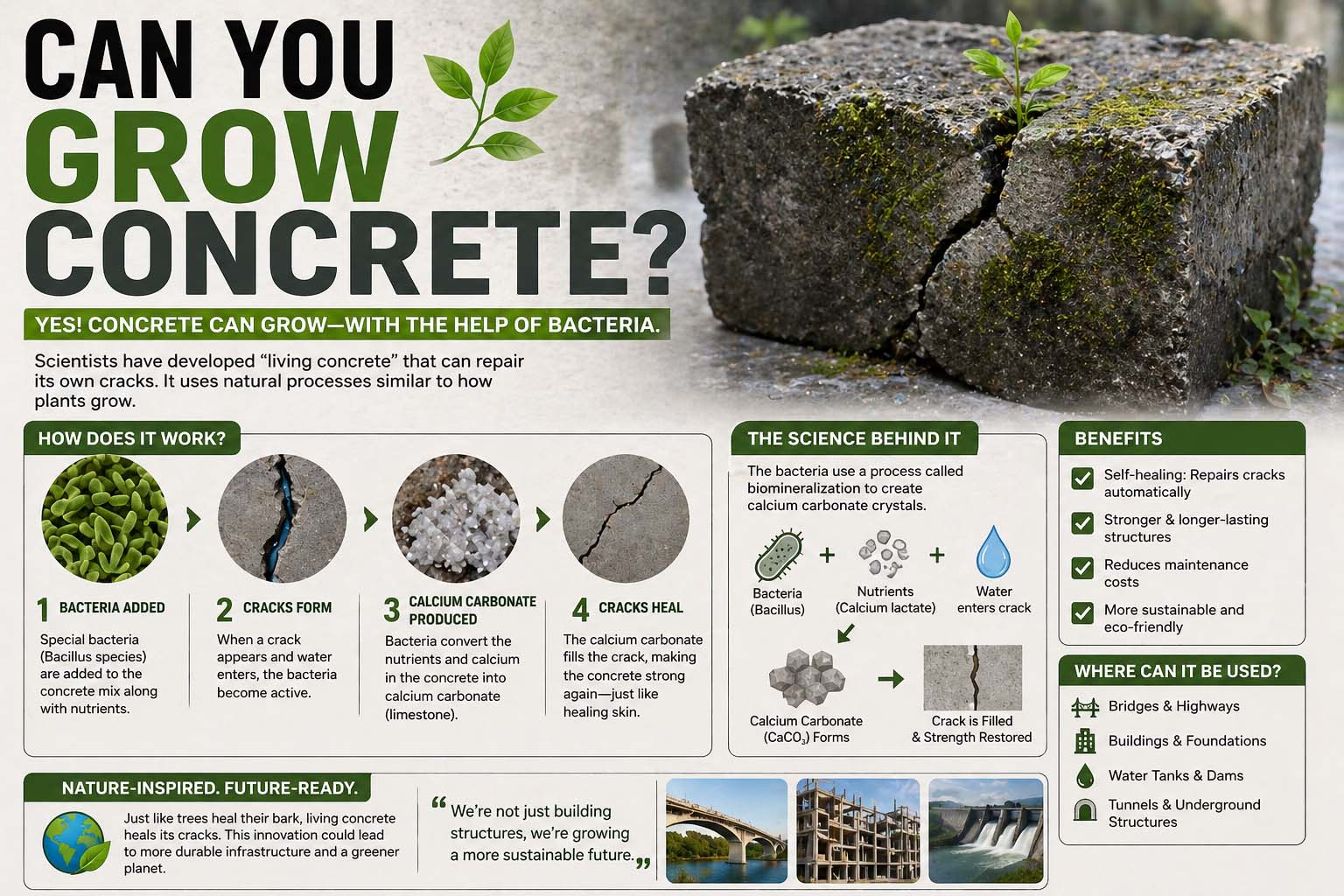
The question can you grow concrete may sound strange at first, but modern science says the answer is becoming more interesting every year. Traditional concrete is made by mixing cement, sand, gravel, and water. It hardens through a chemical process and becomes one of the strongest building materials in the world. However, researchers are now exploring ways to create concrete that can “grow,” repair itself, and even regenerate over time.
This new idea is often called living concrete or bio-concrete. It uses bacteria, minerals, and innovative materials to mimic natural growth processes. Instead of simply pouring and waiting for it to dry, future concrete may be able to heal cracks, expand in controlled ways, and reduce environmental impact.
What Does It Mean to Grow Concrete?
When people ask can you grow concrete, they usually mean whether concrete can be created through natural or biological processes rather than standard industrial manufacturing.
Concrete itself does not grow like a tree or plant. It does not absorb sunlight or produce leaves. But scientists have developed materials that behave in a similar way. These materials contain living microorganisms or reactive compounds that help the structure strengthen or repair itself over time.
This means concrete may not “grow” in the traditional sense, but it can become stronger, fill cracks, and continue developing after installation.
How Bio-Concrete Works
Bio-concrete is one of the most exciting innovations in construction. It often contains bacteria such as Bacillus species. These bacteria remain dormant inside the concrete until water enters through a crack.
Once activated, the bacteria consume nutrients and produce limestone, also known as calcium carbonate. This mineral fills the crack naturally and restores strength. This self-healing process can extend the life of buildings, bridges, roads, and other structures.
Because of this technology, many experts now answer can you grow concrete with a qualified yes. You can create concrete that responds to its environment and repairs itself through biological action.
Why Scientists Want to Grow Concrete
Traditional concrete production creates a large amount of carbon dioxide. Cement manufacturing alone contributes significantly to global emissions. Researchers want greener alternatives that lower environmental damage.
If we can develop concrete that lasts longer and repairs itself, fewer materials are needed over time. This means:
Reduced Maintenance Costs
Self-healing concrete can reduce repair expenses for roads, tunnels, and buildings.
Longer Lifespan
Structures that repair cracks early may survive decades longer.
Lower Carbon Footprint
Using biological processes may reduce the need for frequent replacement and extra cement production.
Smarter Cities
Future buildings may use materials that adapt to weather, moisture, and stress automatically.
Can Concrete Really Reproduce?
Another way people interpret can you grow concrete is whether one block can create another. Surprisingly, researchers have experimented with materials that can multiply in a lab setting.
Some living concrete prototypes use cyanobacteria combined with sand and gelatin-like substances. These microbes use photosynthesis and help bind materials together. In controlled conditions, a block can be split, and each half can continue forming new material.
While this is still experimental, it shows that construction materials may someday replicate basic growth behaviors.
Everyday Examples of Self-Healing Concrete
Although fully living concrete is still in development, self-healing concrete is already closer to real-world use. Engineers are testing it in:
Bridges
Small cracks in bridges can become dangerous over time. Self-healing concrete helps seal damage before it worsens.
Parking Structures
Water and salt can weaken concrete in parking garages. Bio-concrete may increase durability.
Roads
Road cracks are expensive to repair. Smart materials could lower long-term maintenance costs.
Coastal Buildings
Saltwater environments damage traditional concrete quickly. Advanced mixtures may resist corrosion better.
Challenges of Growing Concrete
Even though the concept is exciting, there are still obstacles before living concrete becomes common.
Cost
Advanced materials and biotechnology are currently more expensive than regular concrete.
Large-Scale Production
Laboratory success does not always translate into mass manufacturing.
Durability Testing
Scientists need long-term data to prove how well bio-concrete performs over many years.
Regulation
Building codes and safety rules must adapt before new materials can be widely used.
These challenges mean that while can you grow concrete is increasingly answered with yes, widespread adoption will take time.
Could Concrete Become Sustainable?
One of the biggest reasons people ask can you grow concrete is sustainability. Traditional cement requires high heat and energy to produce. Bio-based materials may reduce emissions and waste.
Some future possibilities include:
- Concrete made with recycled industrial waste
- Carbon-absorbing concrete that traps CO2
- Bacteria-based repair systems
- Materials grown using sunlight and microbes
If these technologies continue improving, construction could become cleaner and more efficient.
The Future of Construction Materials
Imagine buildings that repair their own walls after small cracks appear. Picture roads that last longer with less maintenance. Consider homes made from eco-friendly materials that strengthen naturally over time.
These ideas are no longer science fiction. Researchers around the world are actively working on them. While standard concrete still dominates the market, living materials may become a major part of future construction.
As cities grow and climate concerns rise, the need for smarter materials becomes more urgent. That is why the question can you grow concrete matters more today than ever before.
Final Thoughts
So, can you grow concrete? In the traditional sense, no—concrete does not grow like a plant. But through modern science, bacteria, and innovative engineering, we can create concrete-like materials that heal, strengthen, and develop over time.
This emerging technology could reduce costs, lower emissions, and create longer-lasting buildings. While it is still evolving, the future looks promising. Concrete may not sprout leaves, but it could soon become one of the smartest materials humans have ever built.