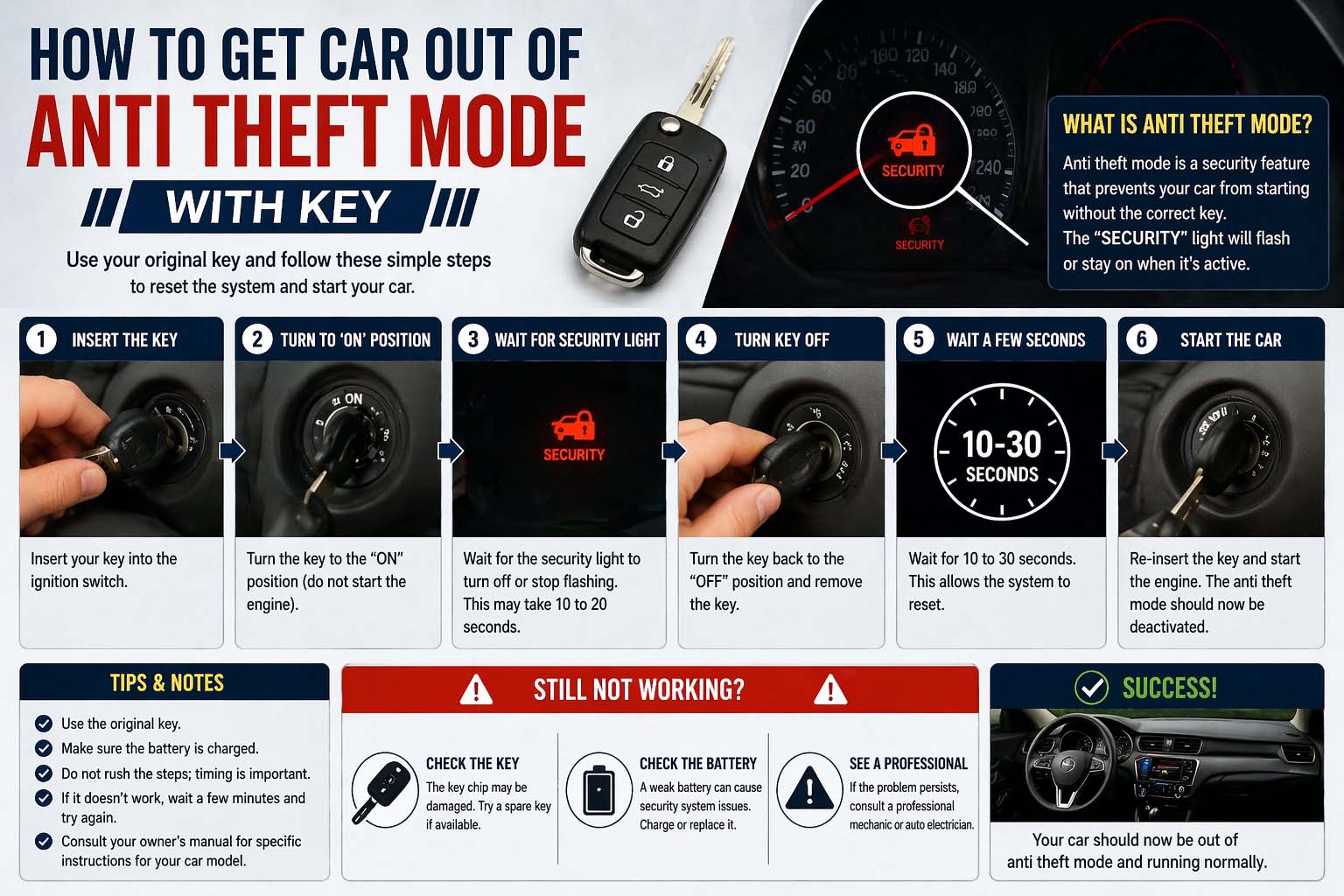
Few things are more frustrating than turning the key in your ignition and discovering your car will not start because the security system has activated. Many drivers search for answers on how to get car out of anti theft mode with key when their vehicle suddenly becomes immobilized. Anti-theft systems are designed to prevent unauthorized use, but sometimes they can activate by mistake due to a dead battery, faulty key chip, damaged lock cylinder, or electronic glitch.
The good news is that many vehicles can be reset using the key and a few simple steps. While methods vary by make and model, there are several common solutions that often work. In this guide, you will learn how anti-theft systems function, why they become stuck, and practical ways to get your car back on the road.
What Is Anti Theft Mode?
Anti-theft mode is part of a vehicle security system that prevents the engine from starting when the car does not detect the correct key or authorization signal. Many modern vehicles use transponder keys with embedded chips. When you insert the correct key, the car reads the chip and allows ignition.
If the system does not recognize the key, it may disable the starter, fuel pump, or ignition system. Dashboard warning lights such as a blinking key symbol, padlock icon, or security light often indicate the issue.
Why Cars Get Stuck in Anti Theft Mode
There are several common reasons a vehicle may enter security mode unexpectedly.
Dead or Weak Battery
Low voltage can confuse the security module and trigger anti-theft protection.
Damaged Key Chip
If the transponder chip inside the key is cracked or worn, the system may not recognize it.
Faulty Ignition Cylinder
Wear inside the ignition lock may prevent proper communication with the key.
Door Lock Sensor Problems
Some systems rely on door lock sensors to confirm authorized entry.
Electrical Glitches
Temporary software or wiring issues may trigger security lockout.
How to Get Car Out of Anti Theft Mode With Key
Many drivers solve the issue using the physical key. Try these steps carefully.
Method 1: Unlock the Driver Door With the Key
Turn the key to the unlock position and hold it there for 20 to 30 seconds.
This method works on many vehicles because the car recognizes the mechanical key and resets the security system. After holding the key, return it to neutral, remove it, then try starting the engine.
If it does not work the first time, repeat the process once more.
Method 2: Turn Ignition to ON Position
Insert the key into the ignition and turn it to the ON position without starting the engine. Leave it there for 10 to 15 minutes.
During this time, some systems re-read the key chip and reset themselves. When the security light stops flashing or turns off, turn the key off for a few seconds, then try starting the car.
This is one of the most common answers for how to get car out of anti theft mode with key.
Method 3: Lock and Unlock the Door Repeatedly
Use the key in the driver door lock. Turn to lock, then unlock several times slowly.
Some anti-theft systems reset after detecting a valid key cycle through the door lock cylinder. Once completed, attempt to start the vehicle.
Method 4: Use a Spare Key
If you have a spare key, try it. The original key may have a damaged transponder chip or weak signal.
Many drivers discover the car starts immediately with the backup key, confirming the original key is the problem.
Method 5: Battery Reset
If safe to do so, disconnect the negative battery terminal for 10 to 15 minutes, then reconnect it securely.
This can clear temporary electronic faults. After reconnecting, use the key normally and try starting the car.
Be aware that disconnecting the battery may reset radio presets or clock settings.
Signs the Reset Worked
After performing a reset, look for these signs:
Security Light Stops Flashing
A steady or off light often means the system accepted the key.
Engine Cranks Normally
The starter should engage without interruption.
Car Starts and Runs
Once running normally, the anti-theft lockout has cleared.
When the Key Method Does Not Work
Sometimes the issue requires deeper repair.
Bad Key Transponder
The chip inside the key may need replacement or reprogramming.
Faulty Immobilizer Module
The anti-theft control module may have failed.
Ignition Switch Problems
Wear or internal faults can block key recognition.
Wiring Issues
Damaged wiring near steering column or security module may interrupt signals.
Preventing Future Anti Theft Problems
You can reduce future lockouts with a few habits.
Replace Weak Battery Early
Low voltage often causes electronic glitches.
Protect the Key
Avoid dropping keys or exposing them to water.
Keep a Spare Key
A programmed spare key can save time and towing costs.
Use Locks Gently
Forcing worn door or ignition locks can damage sensors.
Fix Warning Lights Promptly
If the security light behaves oddly, address it early.
Vehicle Brands With Common Security Resets
Different manufacturers use different systems. Brands often searched for this problem include:
- Ford PATS systems
- GM Passlock / Passkey
- Honda immobilizer systems
- Toyota security systems
- Nissan NATS systems
Your owner’s manual may contain brand-specific reset instructions.
When to Call a Locksmith or Mechanic
Contact a professional if:
- The key will not turn
- Security light stays on constantly
- Engine cranks but dies immediately
- No spare key works
- Battery resets fail repeatedly
- You suspect a damaged key chip
Automotive locksmiths can often program keys faster and cheaper than dealerships.
Conclusion
Knowing how to get car out of anti theft mode with key can save stress, time, and towing expenses. Start with simple solutions like unlocking the driver door, leaving the ignition in the ON position, cycling the lock, or trying a spare key. Many temporary lockouts resolve with these easy methods.
If the problem continues, the issue may involve the key chip, ignition cylinder, battery voltage, or immobilizer system. In that case, professional diagnosis is the smartest next step. Acting quickly can help get your car running again and prevent future anti-theft mode problems.